Built for BC PIPA
from day one.
How Nidl handles PHI, where it lives, who can see it, and the line we draw between AI assistance and clinical decisions. Last reviewed Jul 2026.
PHI stays in Canada.
Period.
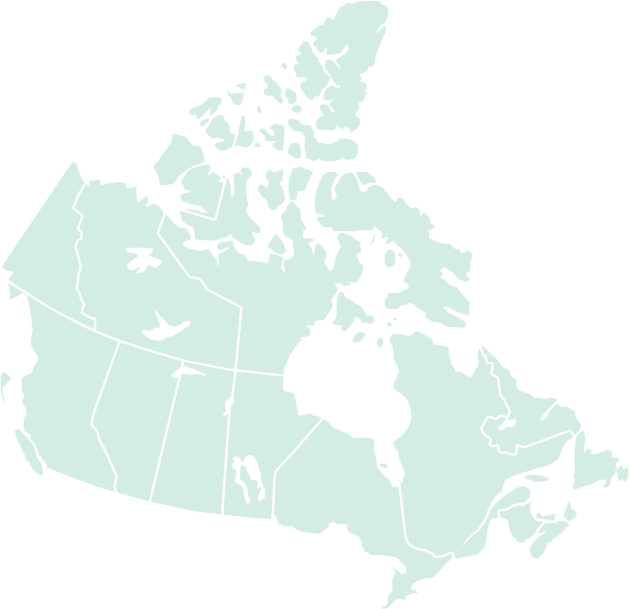
Production data — including patient identifiers, documents, audit logs, and message contents — is stored exclusively in Canadian cloud regions. Cross-border transit is prohibited by tenant policy and enforced at the network layer.
Three boundaries
that don’t move.
Least-privilege by role.
Front desk, reviewer, provider, and admin roles ship with site-scoped permissions. Workspace owners can customize the matrix. SSO via SAML 2.0; 2FA optional but recommended.
- Role-based access control (RBAC) with audit on every grant change
- Optional SSO with Health Authority IdPs
- Session expiry, IP allowlist, device approvals
Every read, write, export.
Each event is recorded with actor, entity, trace ID, and a cryptographic hash that chains to the prior. Daily bundles are exported to compliance contacts automatically.
- Append-only event ledger · daily verification
- Pre-built audit exports for BC PIPA / PHIPA review
- Replayable trace IDs for any clinical or admin action
We do not make clinical decisions.
Nidl handles operations — routing, classification, status messages. No diagnosis, no prescribing, no clinical recommendation surfaces in the patient record without a human action.
- Low-confidence items always require staff confirmation
- Suggested next steps are reviewable artifacts, never autonomous
- Pre-defined escalation paths for ambiguous or urgent items
Everyone we share with.
A full list of vendors that touch any part of the pipeline. Updated whenever it changes; you’ll see this list in your data processing agreement.
| Vendor | Purpose | Region / notes |
|---|---|---|
| AWS Canada Central (ca-central-1) | Primary infrastructure · PHI storage | Montréal, QC |
| Azure Canada West | DR / cross-region replicas | Vancouver, BC |
| Twilio Canada | SMS delivery for patient status | ca-toronto-1 |
| SendGrid (Mailgun EU fallback) | Transactional email | Routing kept in Canada via tenant policy |
| Azure OpenAI Service · Canada Central | AI classification + drafting (opt-in, pilot) | Toronto · model inference stays in Canada · zero data retention · no PHI used for training |
| Google Analytics 4 | Marketing site analytics (page views, traffic sources) | USA (Google Cloud) · no PHI · marketing pages only · workspace + patient-hub routes excluded by pathname allowlist |
What happens
if something breaks.
Talk to our privacy officer.
Compliance review, DPA requests, sub-processor changes, and disclosure inquiries.